Speech-to-speech is faster. Cascaded pipelines are still winning enterprise deals.
Voice Intake · October 2026 · PolyQ Team
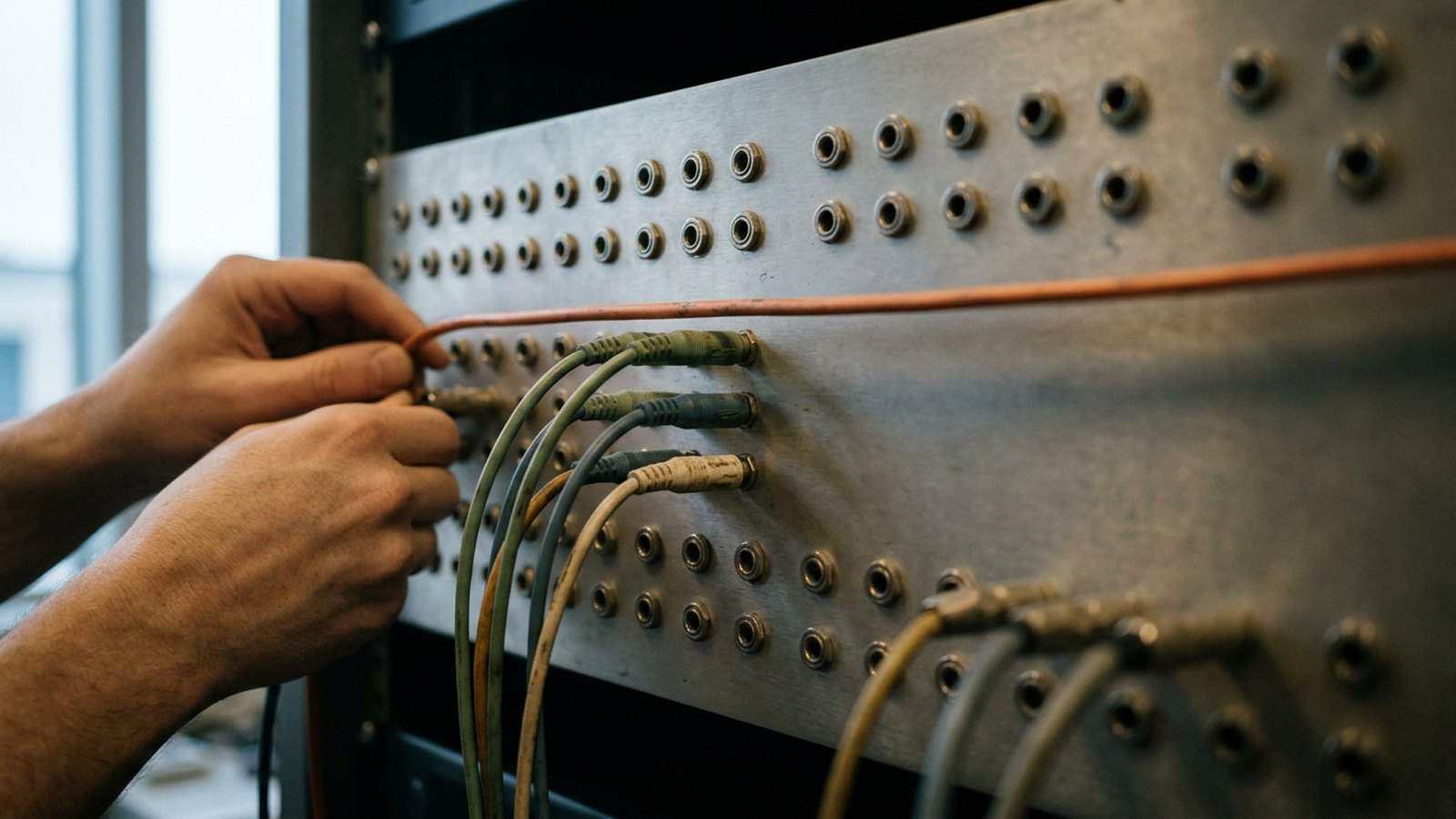
The 2026 comparisons put end-to-end speech-to-speech at roughly 300–700ms against 600–1,200ms for a cascaded speech-to-text, model, text-to-speech stack. Enterprises keep choosing the slower architecture, and the reason is not inertia.
If latency were the only axis, this argument would already be over. Native speech-to-speech models are meaningfully faster, they preserve tone and interruption in ways a three-stage pipeline cannot, and the gap has widened through 2026. And yet the procurement decisions keep landing on the cascaded stack.
- The latency gap is real and roughly two to one: Cascaded pipelines typically land between 600 and 1,200ms end to end. Speech-to-speech models run between 300 and 700ms. In a live conversation that difference is audible.
- Observability is what the slower stack buys: Each stage of a cascaded pipeline emits its own trace, so when a conversation goes wrong you can point at the stage that caused it — a mis-transcription, a bad retrieval, a synthesis artefact. An end-to-end model gives you one opaque step.
- Speech-to-speech is winning where the clock dominates: Live customer service and drive-through ordering are the cases where the experience improvement justifies giving up that traceability. Both are domains where a wrong answer is cheap and a slow answer is not.
- Evaluation stopped being word error rate: 2026 produced a run of voice-agent benchmarks — EVA-Bench, τ-Voice, MP-Bench, SPEARBench and others — that score multiparty handling, full-duplex behaviour and naturalness rather than transcription accuracy alone. Ask a vendor which of these they report.
- Where we sit: For intake and screening the transcript is the deliverable, not a by-product. When the artefact a customer pays for is a record, an architecture you can trace beats an architecture that is quick.
The right architecture depends on whether your product is the conversation or the record of it. That question is worth settling before the latency numbers start doing the arguing.
If you are evaluating voice for intake or screening, ask any vendor which benchmark they report and whether they can show you a per-stage trace of a failed call.